How to Liquidate Slow-Moving SKUs Without Killing Your Profit Margins
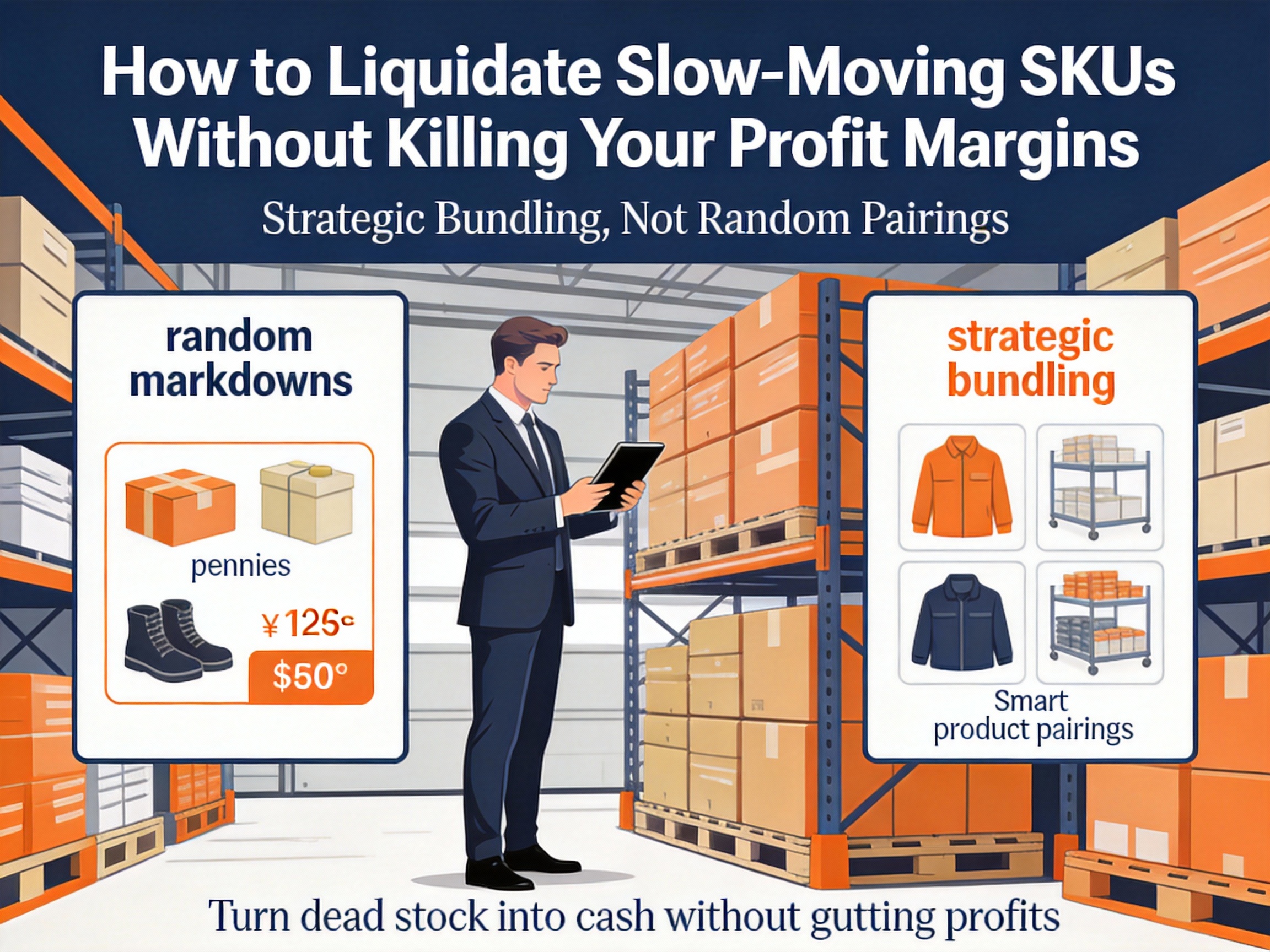
Ever stared at a pallet of unsold inventory, wondering if you have to mark it down to pennies to move it? I’ve been there – more times than I can count – and I’ve learned that slashing prices is rarely the best first move. It erodes your brand’s perceived value and eats into margins you worked hard to build. Instead, there are smarter ways to turn dead stock into cash without gutting your profits.
Strategic Bundling, Not Random Pairings
Skip the lazy bundles of “leftovers.” Instead, pair slow-moving SKUs with complementary fast-sellers that share a customer use case. For example, if you sell kitchen gear, pair a slow citrus press with your top-selling salad spinner. Price the bundle 10% less than the sum of individual prices, but calculate the combined margin to ensure it stays above your baseline (I aim for 22% minimum). This moves dead stock while increasing average order value, and customers feel like they’re getting a curated deal, not a clearance dump.
Reposition for a Niche Use Case
Sometimes the problem isn’t the product – it’s how you’re framing it. A slow-selling heavy-duty storage bin marketed to home organizers can find new life with small business owners needing to ship fragile items. Rewrite your product copy to highlight stackability, shock absorption, and compatibility with standard shipping box sizes. I did this with a line of plastic bins, and within weeks, 30% of the slow stock was gone at full price. No discount needed, just a shift in target audience narrative.
Targeted Retargeting with Perks, Not Discounts
Instead of running broad discount ads for your dead stock, use retargeting to show the SKU only to users who viewed complementary products or abandoned carts with similar items. Offer an exclusive perk like free personalization or extended warranty instead of a price cut. For instance, I ran ads for a slow custom engraving tool to customers who’d looked at our wooden cutting boards. The free engraving perk cost me $2 per unit, but I sold the tool at full price, keeping a 35% margin – way better than a 20% discount would have given me.
Offload to Bulk Buyers Before Clearance
If all else fails, don’t jump to clearance racks first. Reach out to local small retailers or wholesale marketplaces to sell pallets of slow stock at 50% of your cost price. This recoups more capital than selling to consumers at 30% off (after platform fees and fulfillment costs eat into your take). I sold 2 pallets of unsold outdoor gear to a local camping shop last year – it freed up warehouse space and put cash back in my pocket without devaluing my brand online.
- 98
- 0
- 0
- 0