Cross-Border Selling Hurdles: Payment Freezes, Tax Gaps & Tool Choices for Sellers
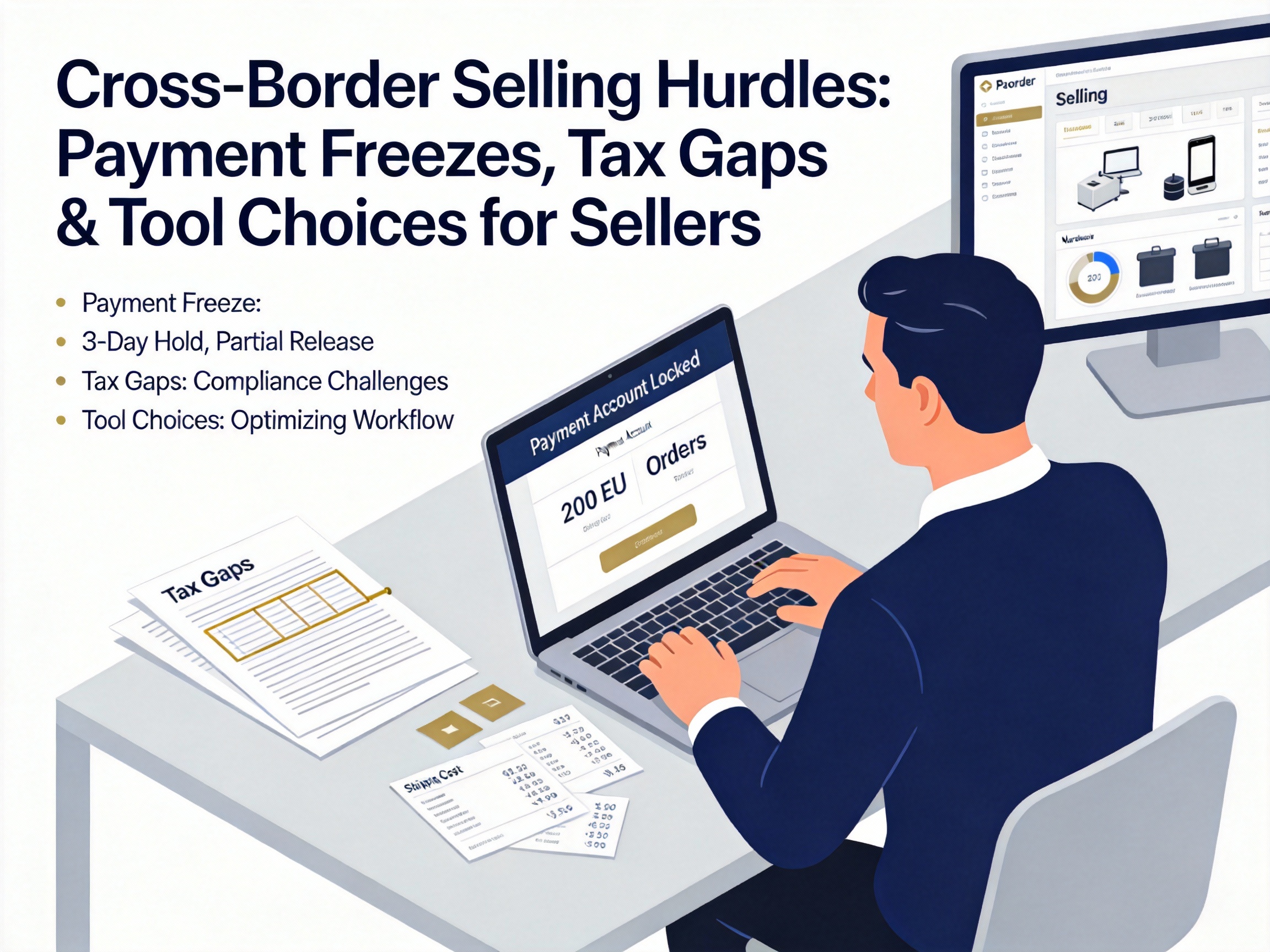
Last month, my primary payment account got locked mid-fulfillment, leaving me unable to cover shipping costs for 200 EU orders. I spent three days on hold with support just to get a fraction of the funds released, and by then, two dozen customers had requested refunds.
Here’s the thing about payment freezes—they don’t just come out of nowhere. I later learned my mistake: I processed a $1,200 bulk order from a first-time Australian customer without uploading proof of the leather inventory I had in stock to back the transaction. Now, I proactively flag any order over $500 to my payment provider, attaching photos of the items and a copy of the customer’s custom request email before hitting “process.” I also opened a secondary low-fee payment account exclusively for high-risk regions like Australia, so if one account gets locked, I still have access to funds for other regions’ orders.
Tax differences have been another quiet killer of my margins. I once accidentally charged US customers EU VAT rates because my platform’s auto-tax tool wasn’t updated for new US nexus rules. That led to 15 chargebacks in one week, plus a small fine from a state where I store a small batch of inventory. My fix? I now use a tax tool that syncs with my storage providers to automatically apply the correct sales tax or VAT based on where the order ships from, not just where the customer is located. It’s cut my tax-related errors by 90%.
When it comes to choosing payment tools, I’ve tested three major options and learned hard lessons. PayPal has the widest customer acceptance, but their cross-border fees eat into 4% of each order’s value—way too much for my thin-margin leather goods. Stripe’s fees are lower, but their freeze policies are stricter for sellers with mixed regional sales. For EU customers, I switched to a local payment provider, which eliminated currency conversion fees entirely and saved me 3% per order. For US customers, Stripe is still my go-to because it integrates with my shipping carrier to automatically generate tax documentation for each shipment, reducing the risk of freezes.
Right now, I’m still looking for a way to streamline all these processes without hiring an accountant, but these small tweaks have already kept my business from folding twice. If any other sellers have hacks for avoiding tax nexus pitfalls or navigating payment provider support faster, I’m all ears.
- 204
- 0
- 0
- 0