Unearth Hidden Complementary Product Gaps & My Curated Toolkit
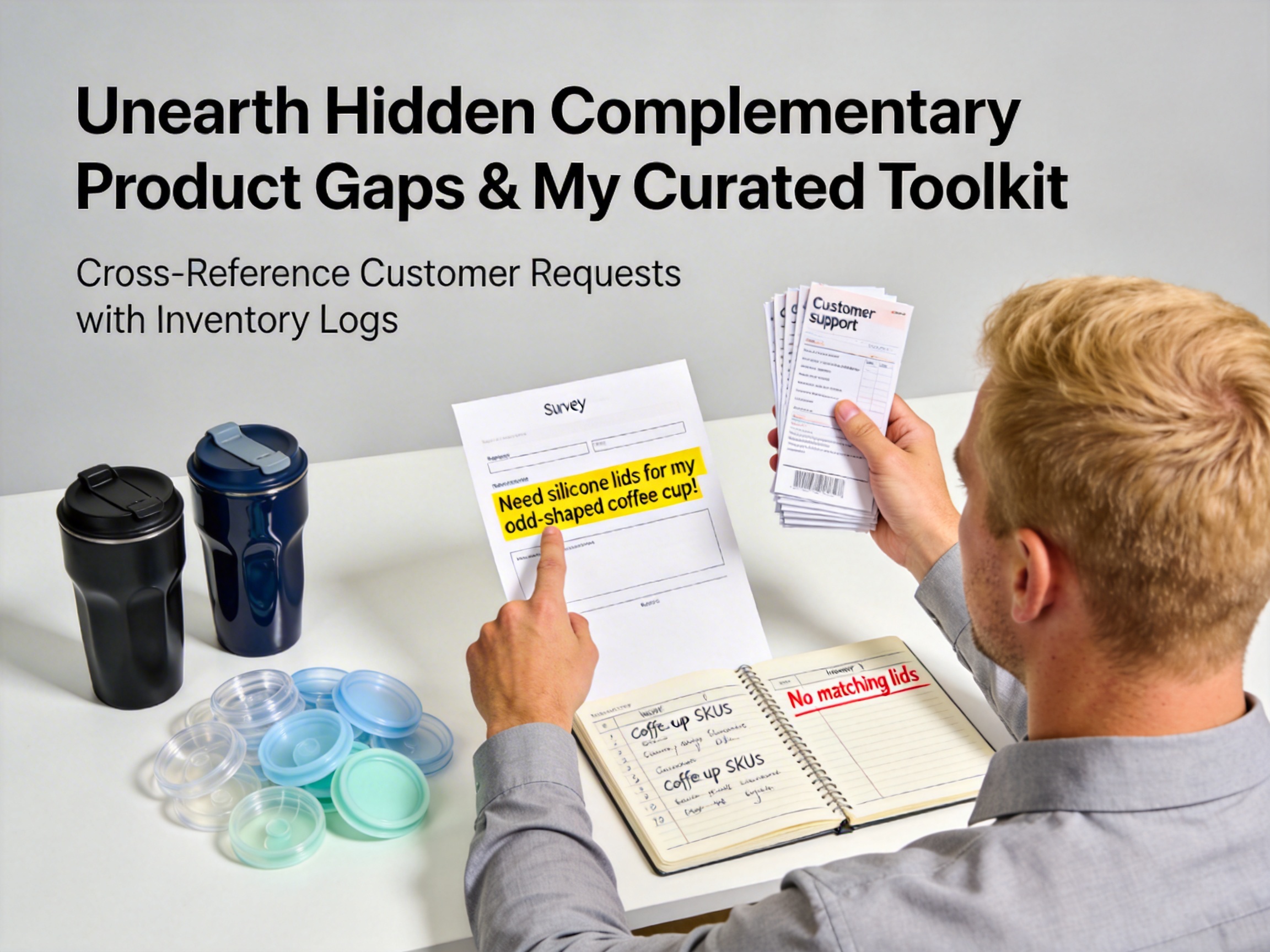
Last month, I was sorting through customer support tickets when I noticed a weirdly consistent request: silicone lids that fit the odd-shaped reusable coffee cups I stock. At first, I brushed it off as a one-off, but after tallying 17 similar notes in a week, I realized I was sitting on a goldmine of complementary product opportunities I’d never considered before.
Cross-Reference Customer Requests with Inventory Logs
I started by dumping all post-purchase survey responses and support ticket notes into a basic spreadsheet, then cross-referencing them with my current inventory SKUs. The goal wasn’t to add random stuff, but to spot gaps that directly tied to what customers were already buying. For example, 22% of cup buyers mentioned struggling to find travel-sized brush cleaners for the narrow interiors—something I could source easily without overhauling my lineup.
Test Small Batches First to Avoid Wasted Stock
Here’s a hard lesson I learned the hard way: don’t jump into full inventory runs for unproven complementary items. I once ordered 500 silicone straws thinking they’d pair perfectly with my cups, but the straws were too thick to fit the cup’s narrow spouts. Now, I use a small-batch supplier tool to order 50-100 units first. If they sell out in two weeks or less, I scale up. If not, I mark them down as a free gift with cup purchases to clear stock without taking a huge hit.
Track Review Keywords to Catch Hidden Demand
I swear by a free keyword alert tool that scans my product reviews and top competitors’ for phrases like “wish this came with” or “missing.” Recently, it flagged that customers wanted heat-resistant sleeve inserts for my ceramic cups—something I’d never thought of because my cups already have a matte finish. Adding those inserts boosted average order value by 14%, since 38% of cup buyers now add a sleeve to their cart.
Finally, I sync all complementary items with my inventory management tool so when someone buys a cup, the system automatically suggests pairing it with a lid, cleaner, or sleeve at checkout. This not only saves me time packing (I can ship them in one box instead of separate) but also makes customers feel like I’m anticipating their needs. The best part? None of these tools cost more than a few bucks a month, and they’ve added a solid chunk to my monthly revenue without extra ad spend.
- 171
- 0
- 0
- 0