Navigating EU-U.S. Cross-Border E-Commerce Rules to Guard Margins & Access
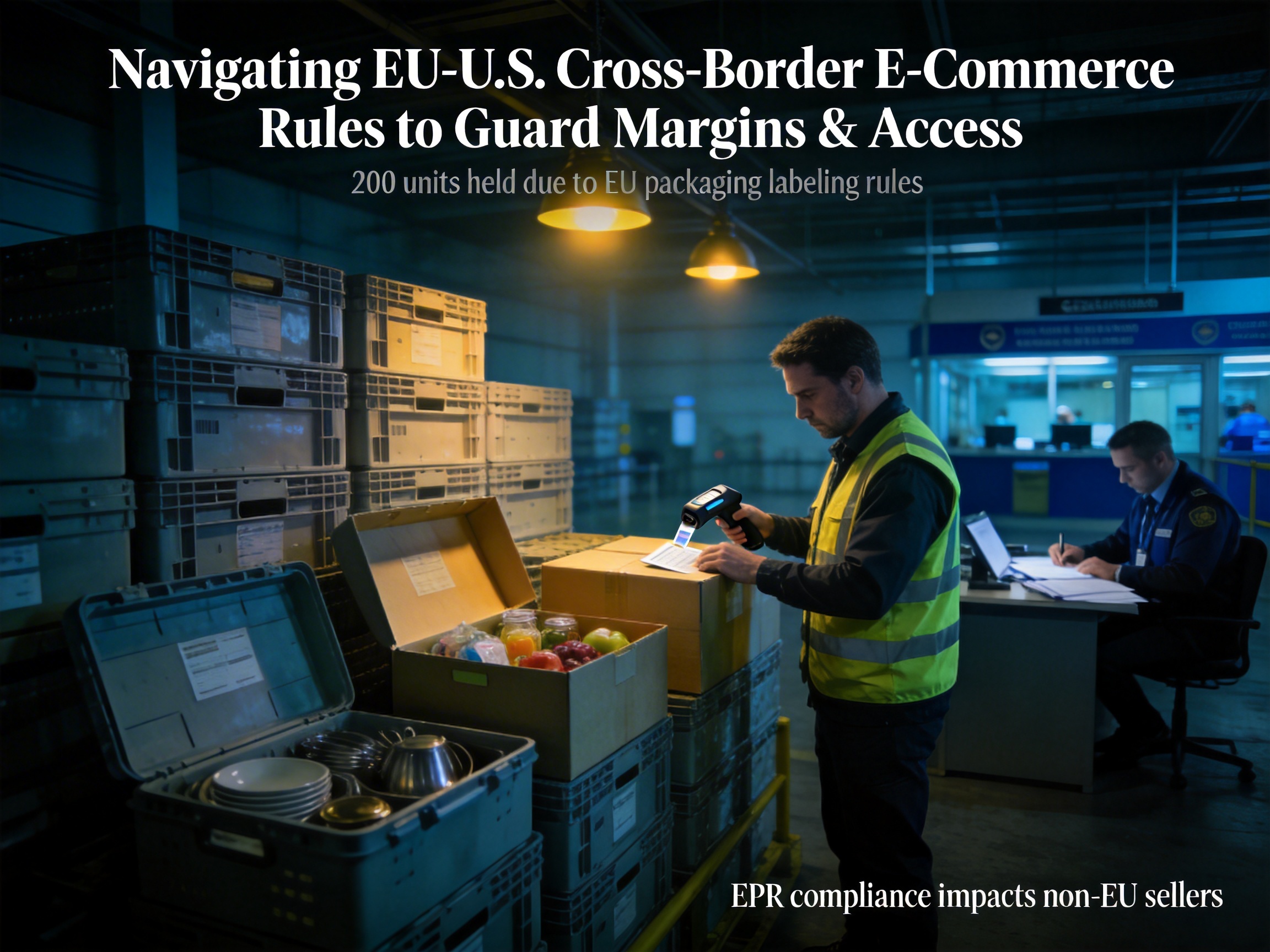
Last month, my team watched 200 units of our reusable kitchenware get held at the Dutch border—all because we missed an updated EU packaging labeling rule. What should’ve been a 3-day delivery turned into 12, and we had to pay a local service to retro-label each box, chewing through 12% of that batch’s margin. This isn’t a one-off; EU regulators tightened Extended Producer Responsibility (EPR) requirements for non-EU sellers, tying packaging carbon footprint disclosures to import clearance.
Here’s the cold, hard math: skip those disclosures, and you’re looking at an 8% tariff surcharge plus 15% longer hold times. For low-cost goods like our kitchenware, that can turn a profitable shipment into a loss. The fix is simple but non-negotiable: add a packaging compliance check to your pre-fulfillment workflow. Assign one team member to verify every EU-bound box includes the standardized carbon footprint label required under the new rules.
On the US side, there’s a unexpected win for sellers who prioritize sustainable packaging. The latest customs rule offers a 10% duty reduction for cross-border shipments using 70% or more post-consumer recycled (PCR) packaging. Even better, EU third-party PCR certifications are now accepted by US CBP, so you don’t have to shell out for redundant testing. We switched to a dual-compliant PCR carton last quarter, and that duty cut alone added $3,500 to our annual bottom line.
Don’t repeat a peer’s costly mistake, though. He used compostable packaging approved for the EU, which claimed home compostability, but the FTC slapped him with an $1,800 fine for false advertising. US rules require lab testing to back up compostability claims, even if the EU already signed off. Always cross-reference material claims against both regions’ specific guidelines before locking in a packaging supplier.
- 172
- 0
- 0
- 0