Navigating EU E-Commerce: Subregion-Specific Inventory & Compliance Wins
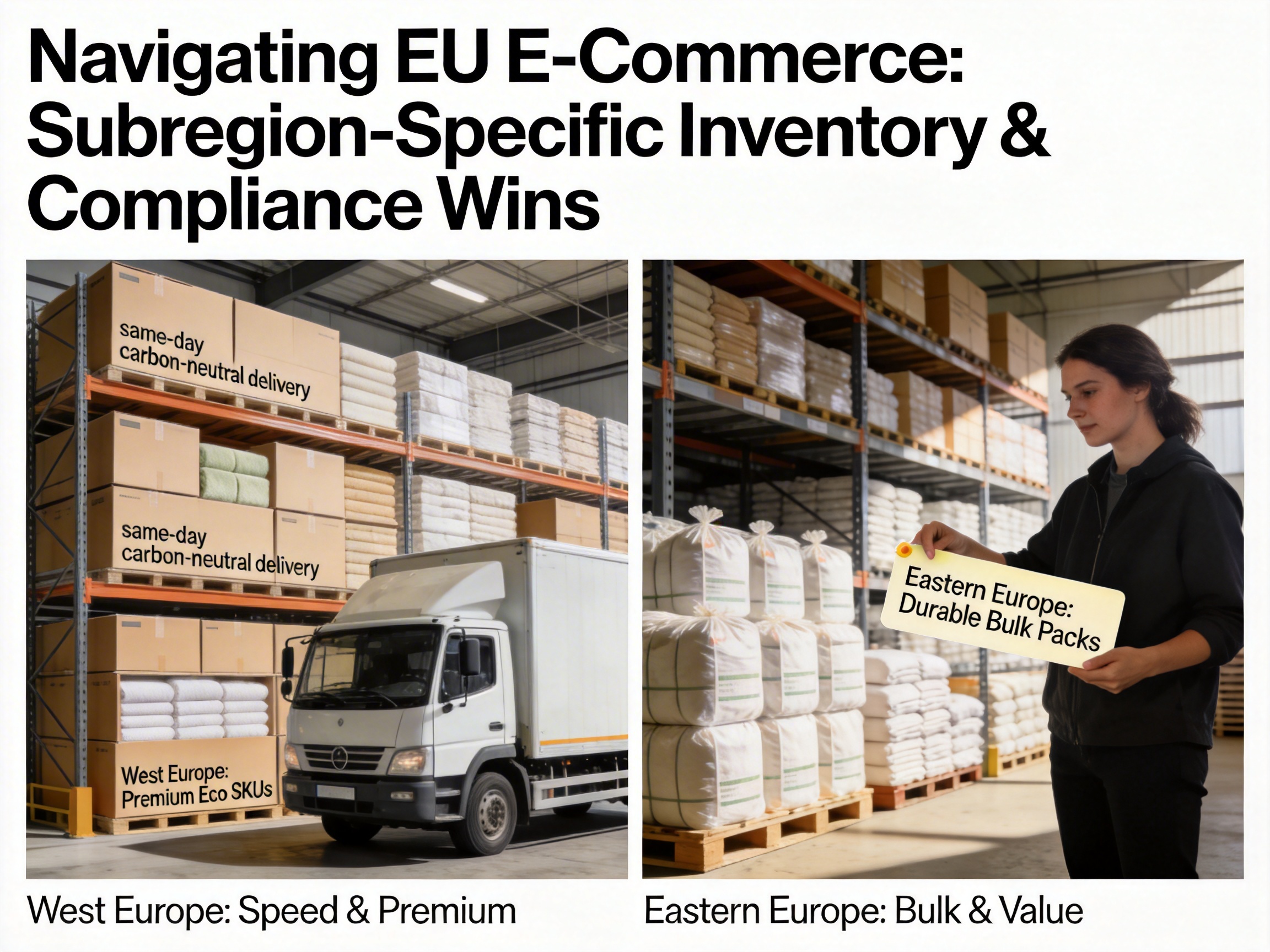
Ever noticed your best-selling sustainable linen towels sit unsold in Polish warehouses while Spanish customers wait 10 days for restocks? That’s not a fluke—it’s subregional consumer preference at play. West European shoppers will pay 15% more for same-day carbon-neutral delivery, so I shifted my top eco SKUs to local fulfillment centers in Germany and France. For Eastern Europe, I now stock bulk packs of basic, durable linen variants instead of premium labeled ones; their buyers prioritize long-lasting goods over eco-marketing fluff, which cuts my per-unit storage costs by 20%.
I learned the hard way that GDPR compliance isn’t a one-size-fits-all task when expanding across EU subregions. I once ran a retargeting ad campaign using Italian purchase data to target Greek shoppers, only to get hit with a minor GDPR fine and a wave of unsubscribes. Turns out, even within the EU, you can’t transfer personal data without market-specific consent forms. Now, I use short, checkbox-only opt-ins for Spain and Italy, where shoppers value speed, and detailed data breakdowns for Germany, where transparency is non-negotiable. This not only keeps me compliant but also boosts opt-in rates by 10% on average.
Small, hyper-local tweaks to your messaging can move the needle more than any pan-EU ad spend. Here are three that worked for me:
- For Southern Europe, frame products around shared moments—my linen towel sales in Spain jumped 12% when I swapped “stain-resistant” for “ideal for post-paella cleanup with the family.”
- For Northern Europe, lean into hard data: my LED bulb sales in Sweden spiked 17% after I added exact annual kWh savings, even at a 5% price premium over competitors.
- For Eastern Europe, ditch “free shipping” claims—local shoppers distrust hidden fees, so I advertise “no surprise import charges” instead, cutting cart abandonment by 18% in Poland.
- 269
- 0
- 0
- 0