Unpacking Loyalty Program Failures: First Principles for E-Commerce Sellers
Have you ever launched a customer loyalty program, poured time into setting up tiers and points, only to see no lift in repeat purchases or margins? I used to chalk it up to bad promotion, but once I started digging with first principles—stripping away generic advice to look at core customer behavior—I realized I was making critical missteps.
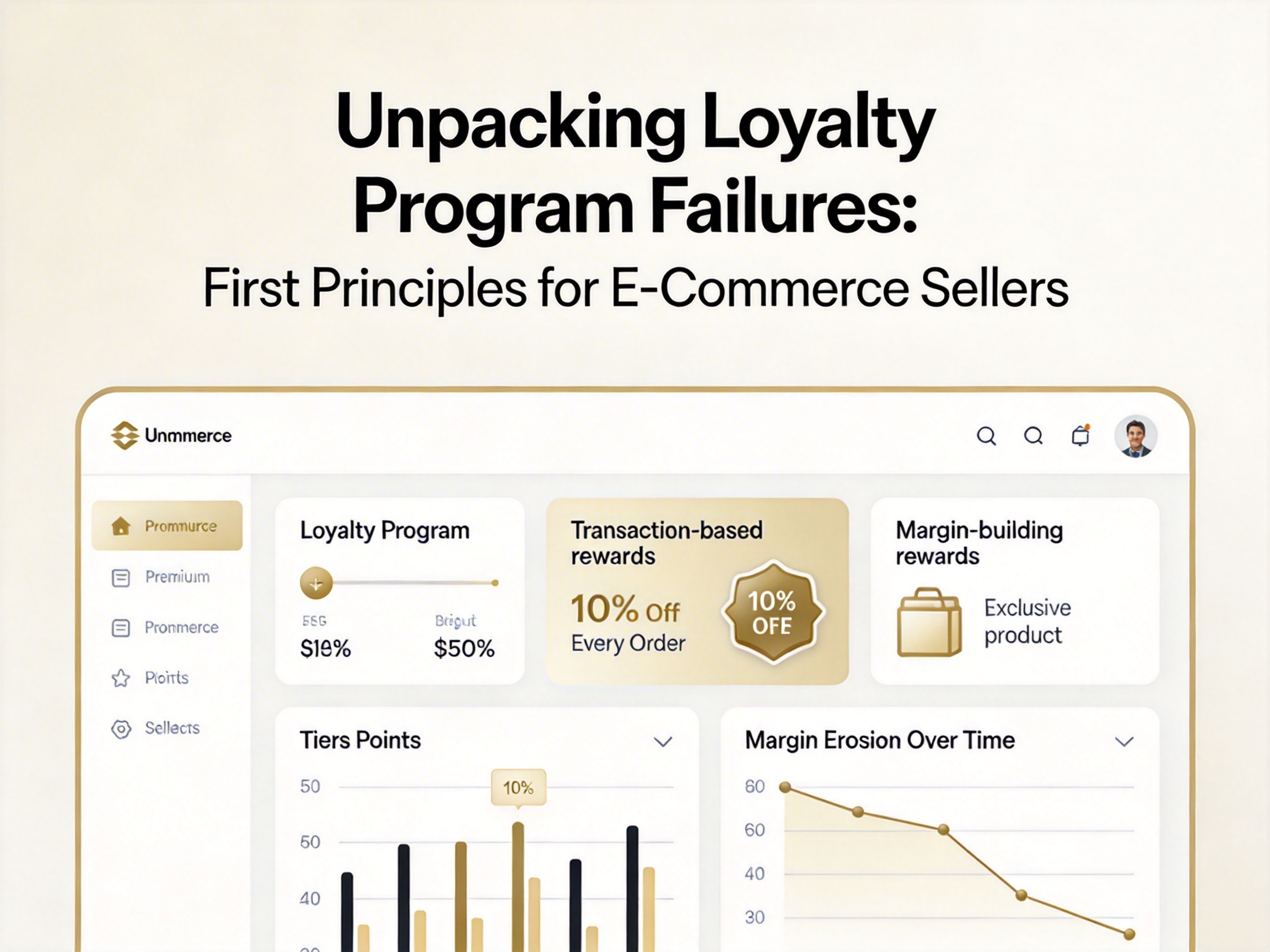
First, I was rewarding transactions instead of margin-building behavior. Offering 10% off every order trained customers to wait for deals, eroding my profit on every sale. Now, I reward actions that boost my bottom line: bundling high-margin slow-moving inventory with bestsellers, leaving a verified review that drives organic traffic, or referring a friend who makes a first purchase. Each adds value without slashing per-unit margins.
Second, I copied generic tier structures without considering my actual valuable customers. That bronze-silver-gold model looks polished, but a customer who buys once a quarter with 40% margin is way more valuable than someone who buys weekly with 5% margin. I now tier customers based on lifetime margin contribution, not total spend. I pull this data from my sales reports, tag high-margin buyers, and reserve exclusive early access to limited stock only for them—no discounts needed.
Third, I loaded my program with too many irrelevant perks, overwhelming customers and wasting my time. I once had 8 different reward options, and half were never redeemed. Now I stick to 2-3 perks that solve my core customer’s biggest pain points. For my sustainable apparel shop, that means free carbon-neutral shipping on loyalty orders and a take-back program where customers can return old items for loyalty points to recycle them. These perks align with my brand identity and make customers feel like they’re part of something bigger, not just chasing a discount.
Finally, I stopped treating the loyalty program as a standalone tool and integrated it into my daily operations. When I restock a popular item, I notify high-margin loyalty members first—this reduces stockouts for my best customers and moves inventory faster. I also use feedback from loyalty members to adjust my product line, which cuts down on unsold inventory and ensures I’m selling what people actually want.
- 301
- 0
- 0
- 0