Turn Slow-Moving Inventory Into Steady, Profit-Driving Value
I stared at my warehouse shelf of organic linen napkins, my stomach twisting. I’d slashed prices twice, but the stack barely dwindled, and my margins were bleeding out faster than I could restock my top sellers.
Reframe inventory as a value bundle canvas
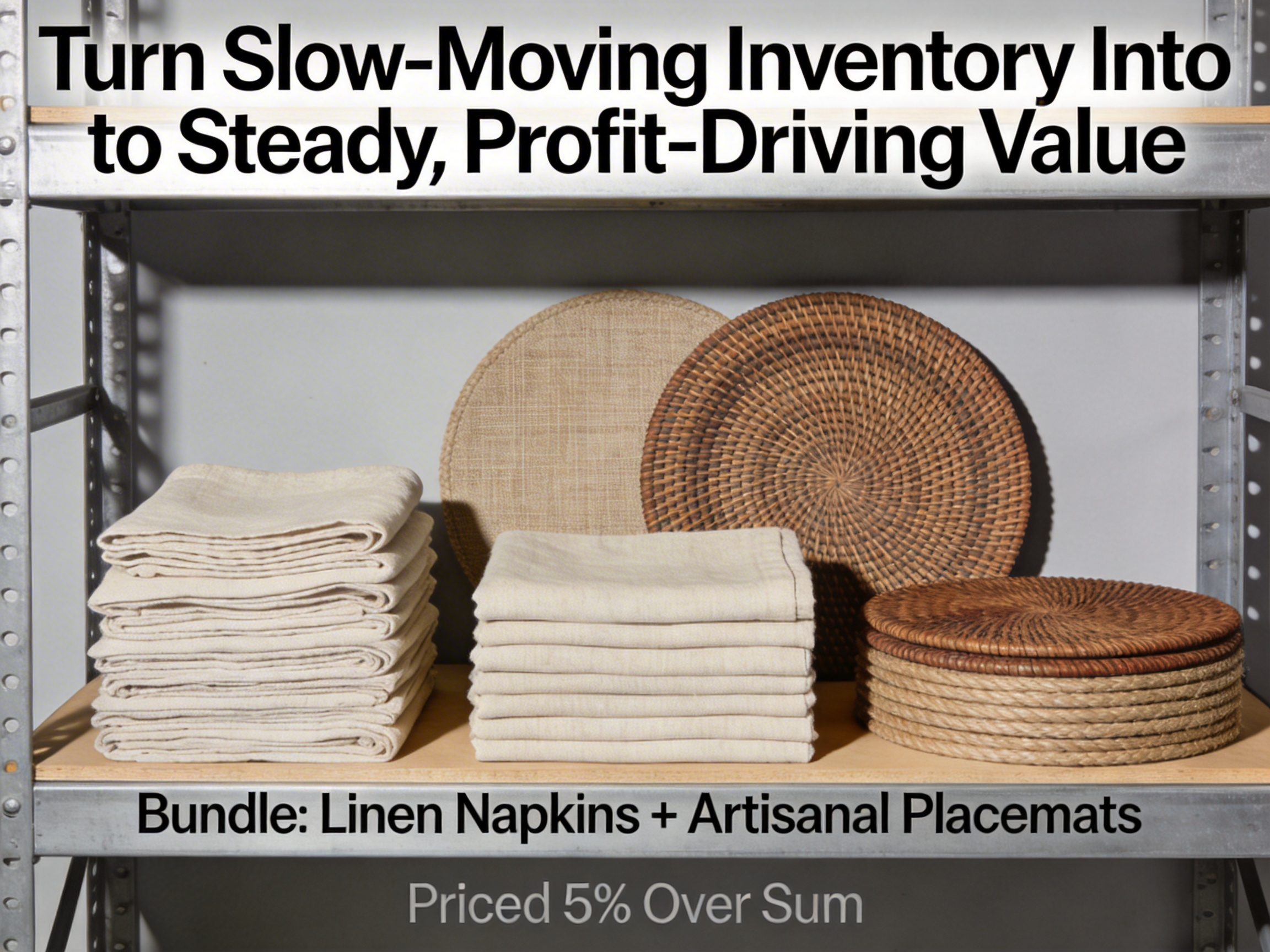
Ditch the reflex to discount—instead, pair slow-moving SKUs with complementary fast-sellers in curated, intentional sets. I matched the napkins with my top-selling artisanal placemats, pricing the bundle at 5% over the sum of individual prices. This didn’t eat into profits, and customers saw extra value in getting a coordinated set, moving 30% of the overstock in three weeks without markdowns.
Reposition for an overlooked niche use case
Dig into your customer support tickets for hidden use cases. I noticed a handful of inquiries asking if the napkins could double as table runners for small outdoor tables. I rewrote the product copy to lead with this compact event styling hack, updated the product tags, and shared user-generated content of customers using them this way. This small shift unlocked a new audience segment that didn’t care about "napkins" but needed a space-saving table runner solution.
Leverage micro-collaborations for targeted reach
Skip the flashy influencer campaigns and partner with niche creators who align with your new use case. I connected with three small event planners focused on intimate backyard gatherings. Each received a bundle in exchange for a single Instagram Reel showing how to style the napkin-runners for a brunch. These posts drove consistent, qualified traffic—no viral luck required, just targeted eyes on a product that solved a specific problem.
Consistent progress doesn’t come from quick fixes; it’s about digging into the data you already have and reimagining what your inventory can do for your customers. By focusing on value, niche positioning, and targeted collaborations, you can turn stagnant stock into steady profits without sacrificing margins.
- 334
- 0
- 0
- 0