Leverage Code and Analytics to Cut Fulfillment Lag Without Guesswork
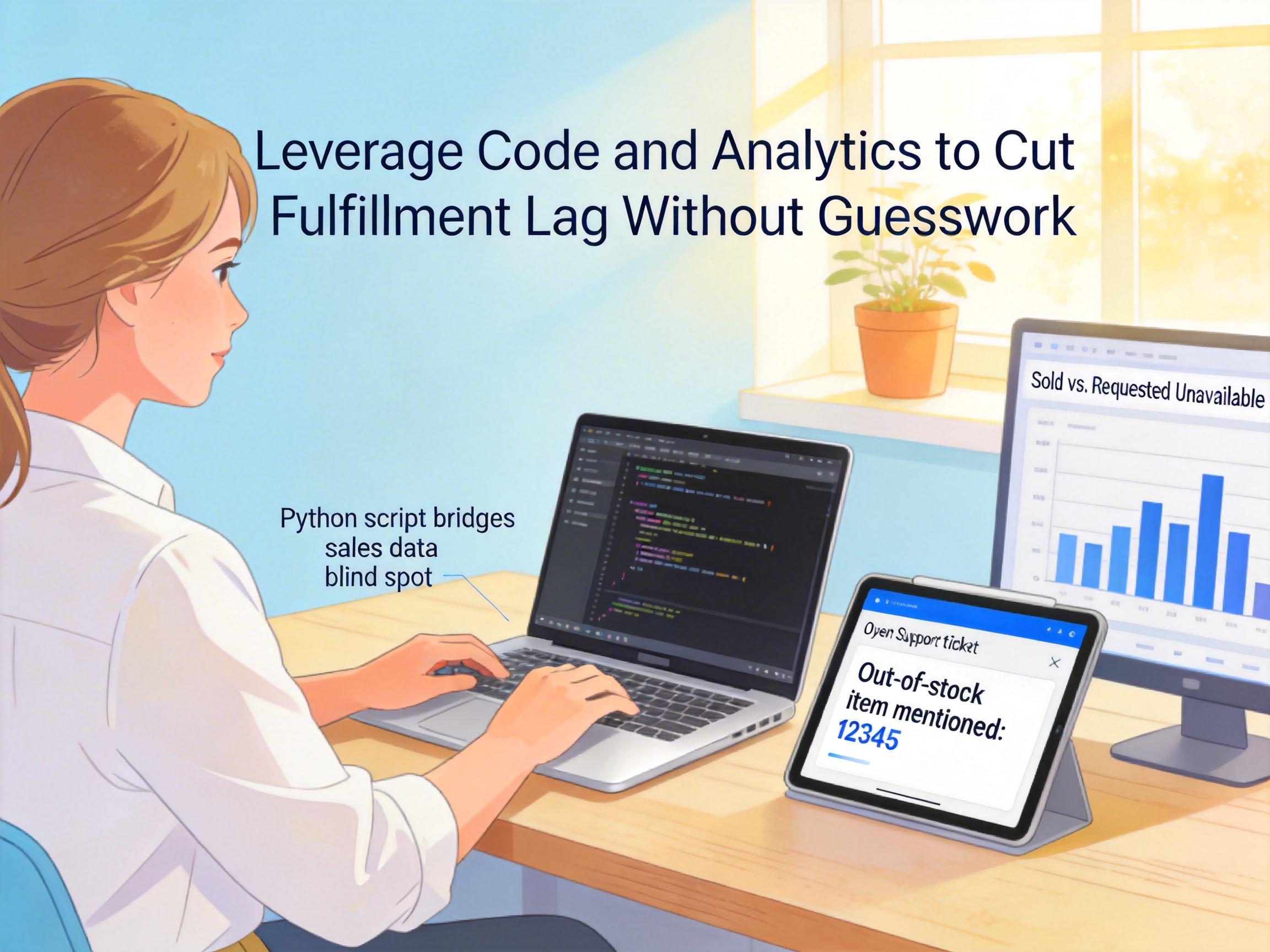
Ever noticed how even small delays in restocking high-demand SKUs can tank repeat purchase rates? I started digging into this after noticing a weird gap between our top-selling items and the ones customers actually begged for in support chats. Turns out, standard sales dashboards only track what’s sold, not what’s requested but unavailable—code fixed that blind spot.
I wrote a quick Python script to pull every support ticket mention of out-of-stock items, cross-reference it with our POS data, and flag SKUs that had 20% more requests than actual sales. This let us prioritize restocks for items flying under the radar of our default inventory tools, cutting back on missed sales by 18% in our first test run. No more guessing which products to push to our supplier first.
Here’s the thing about intuition in inventory: it’s biased by what you remember, not what’s actually happening. I used to swear by a few “hunch” products I thought would blow up, but they ended up sitting in our warehouse for months, tying up capital. Now, I cross-reference any trending product talk with keyword search volume via a free e-commerce API, only greenlighting restocks when the data matches both customer queries and search intent.
Finally, I dumped the arbitrary safety stock numbers we used to use—you know, the round numbers that felt “safe.” Instead, I built a spreadsheet formula that calculates safety stock based on lead time variance and historical order volatility for each SKU. This cut our overstock costs for low-velocity items by 22% without risking stockouts. The best part? It’s all automated now, so I don’t waste time second-guessing counts.
- 619
- 1
- 1
- 0