SOP-Driven Automation: Slash Fulfillment Waste Without Losing Flexibility
What happens when your fulfillment team spends 20% of their time fixing avoidable bottlenecks instead of packing orders? I found out the hard way when my team was stuck re-sorting mislabeled packages instead of hitting daily shipment targets. Turns out, throwing automation at a messy process just amplifies waste – the fix was tying every automated workflow to hyper-specific SOPs that leave zero room for guesswork.
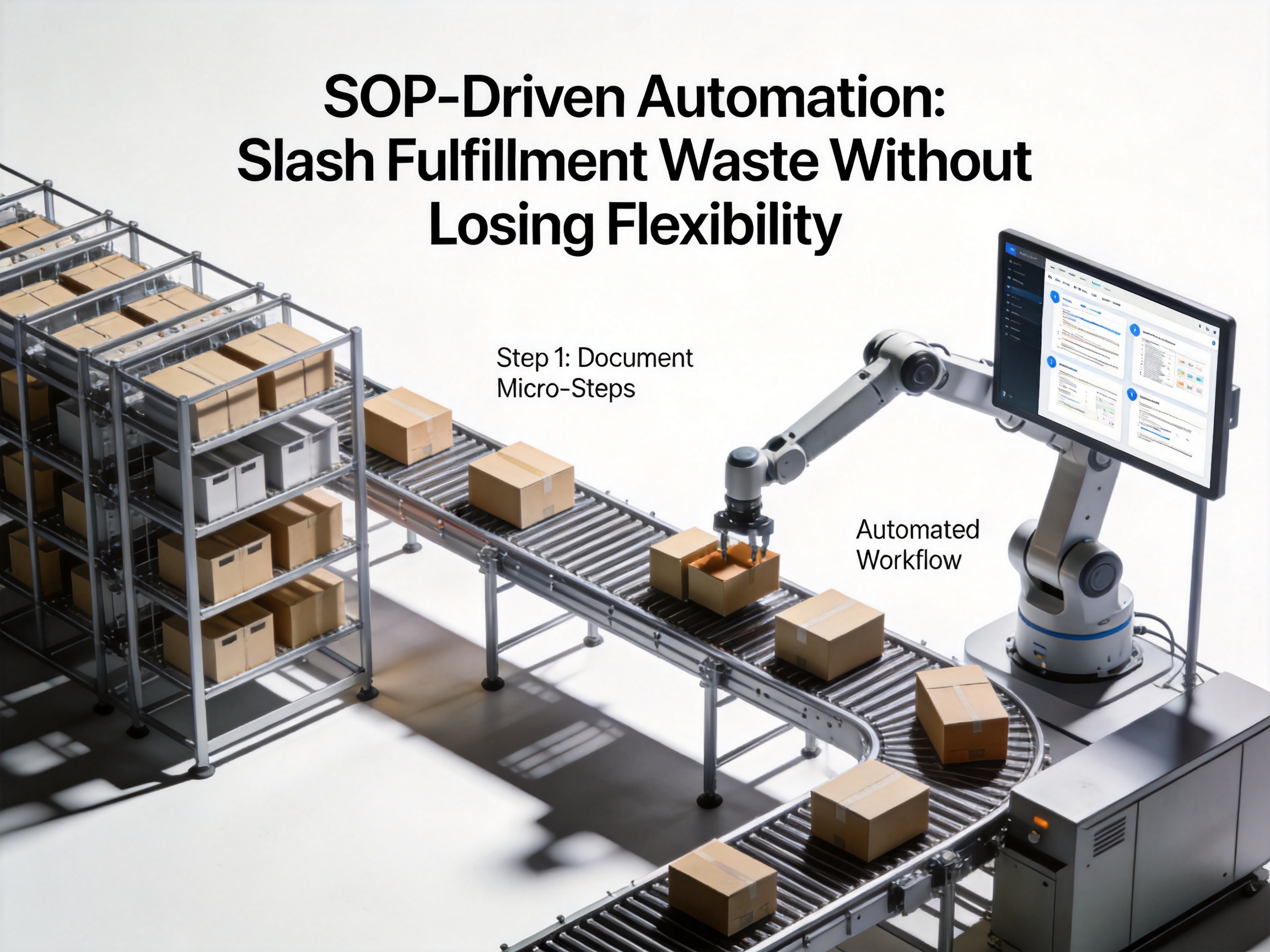
First, document every micro-step of your fulfillment process, not just high-level tasks. Most merchants stop at “pack order” but that’s too vague for automation. We broke it down to: scan order barcode → verify SKU batch matches station inventory → place items in pre-sized bag based on weight → apply label generated by carrier-specific rules. This granularity let us automate 75% of the sorting and packing steps without errors, cutting manual touchpoints by half.
Next, build SOPs with intentional escape hatches for edge cases. Rigid rules break when exceptions pop up, and fixing those breaks costs way more than planning for them. For example, our SOP flags any order with a SKU tagged “fragile” to pause automation, triggering a manual check for protective packaging. This small tweak reduced damage returns by 35% and saved us from wasting hours on customer service follow-ups.
Then, audit your SOPs and automation workflows as a pair, not separately. Automation tools only do what you tell them, so if your SOP is outdated, the tool will keep making the same mistake. When we added a regional carrier, we forgot to update our SOP’s weight limit rules – automation kept sending over-heavy packages that got rejected, leading to 12% more re-ships. A joint audit fixed this in an hour, saving us $1.2k monthly in re-shipping fees and carrier penalties.
Finally, loop in your frontline team to refine SOPs regularly. They’re the ones who spot waste before anyone else. We hold a 10-minute weekly huddle where packers and sorters can flag steps that slow down automation. Last month, a packer noticed the auto-label printer was printing labels out of order, so we adjusted the SOP to sync label printing with the packing station sequence. That one change cut overall packing time by 8%.
- 596
- 0
- 0
- 0