Avoid Costly Custom Supply Chain Blunders in Cross-Border E-Commerce
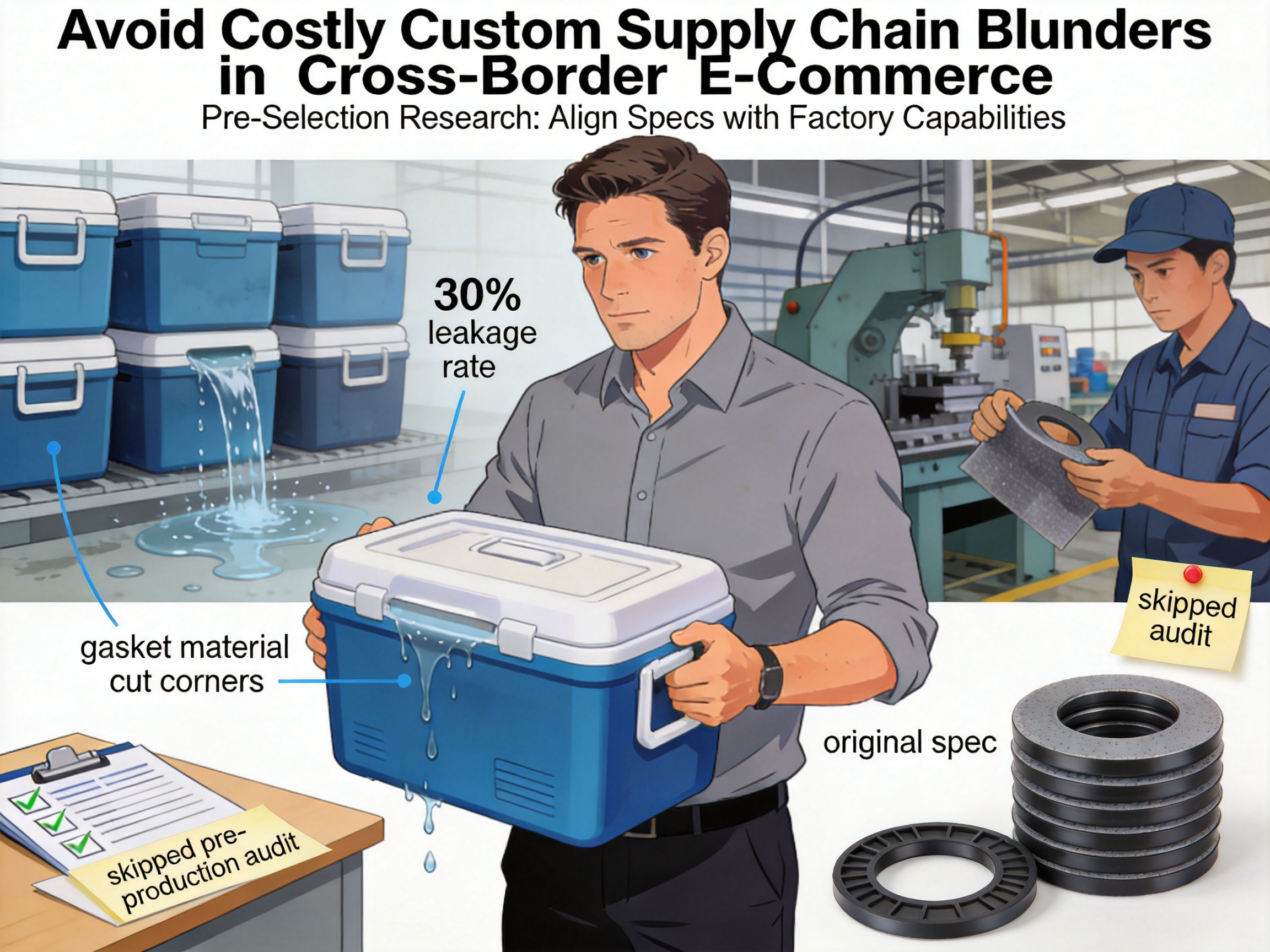
Last year, I sunk $45k into custom portable coolers for my cross-border store, only to have 30% of them leak within two months of shipping. Turns out, the factory cut corners on gasket material to hit my cost target, and I skipped a critical pre-production audit—one small oversight that wiped out my quarter’s profit and tanked customer reviews.
Pre-Selection Research: Align Specs with Factory Capabilities
As sellers, we often fixate on unit costs to boost margins, but factories face pressure to meet those numbers even if it means compromising quality. To bridge this gap, I now require every potential factory to submit a detailed bill of materials alongside their quote, and I cross-reference it with a third-party lab’s material durability report. For example, when sourcing custom hiking water bottles, the lab flagged that the factory’s proposed plastic would crack in extreme temperatures—something the factory didn’t disclose to save costs. This step alone has cut my pre-production risk by 60%.
Full-Process Node Control: Lock in Accountability at Every Stage
Custom production isn’t a set-it-and-forget-it task. I’ve implemented a three-step sign-off process that forces both my team and the factory to document every milestone: first, a prototype approval with a physical sample tested for 72 hours under real-world conditions; second, a mid-production inspection where I send a local agent to check 10% of units for spec adherence; third, a final quality check before shipping that includes leak, drop, and stress tests. Factories initially pushed back on the mid-production check, citing extra labor costs, but I negotiated it into the contract as a non-negotiable term—this has reduced post-shipping defects by 75%.
Post-Sales Risk Prediction: Prepare for Hidden Failures
Even with tight controls, some defects only surface after customers use the product. For custom solar-powered phone chargers, I noticed a pattern of battery failures in humid climates months after launch. Now, I partner with a logistics firm to track customer return reasons by region, and I share that data with the factory to adjust production specs—like adding a moisture-resistant coating for shipments to high-humidity markets. This proactive approach has cut my return rate by 40% and turned frustrated customers into repeat buyers.
- 293
- 0
- 0
- 0