Code-Driven Ad Targeting: Ditching Gut Feel for Measurable E-Commerce Results
Have you ever spent hours tweaking ad audiences only to see flat ROIs that don’t line up with what you ‘thought’ would work? I used to swear by industry blogs and my own gut instinct when setting up campaigns, until I realized every choice without hard data was just throwing money into a black hole. It wasn’t until I started leaning into code and analytical tools that I stopped chasing phantom conversions.
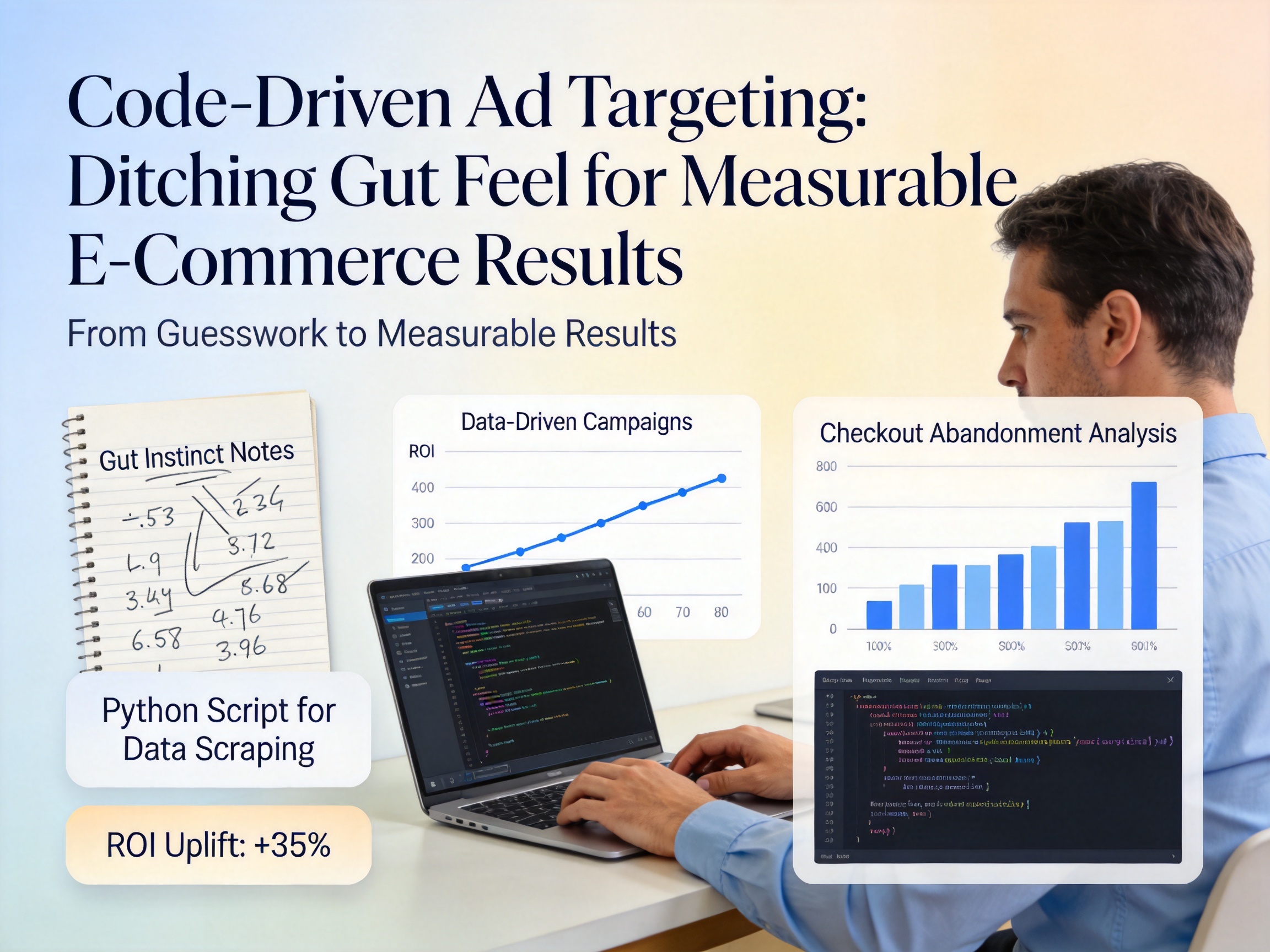
My first win came from writing a simple Python script to scrape checkout abandonment logs. Instead of targeting generic “cart abandoners,” the script filtered users who added high-margin outdoor gear but left before entering payment details. This segment had a 37% higher conversion rate when retargeted with limited-time free shipping, a number I never would have guessed without drilling into the raw data.
I also swapped manual ad copy testing for an automated tool that runs iterative A/B tests based on real-time conversion data. No more debating whether a witty headline or a straightforward value prop performs better— the tool spits out clear metrics, showing that the headline highlighting “durability for year-round use” had a 23% higher click-through rate than its cutesy counterpart. I now let the tool scale the top-performing variants without second-guessing.
The biggest pitfall I avoided was jumping on viral audience trends. Everyone in my niche was targeting users who followed a popular outdoor influencer, but a quick regression analysis using my e-commerce platform’s API showed zero correlation between that followership and actual purchases. Instead, I focused on users who had viewed product reviews for more than two minutes— a segment that drove 19% of my monthly sales.
At the end of the day, there’s no room for unsubstantiated assumptions in e-commerce. Every decision, from ad targeting to copy, should be rooted in data that code can extract and analyze. Ditching gut feel hasn’t just boosted my ROI; it’s turned campaign management from a guessing game into a predictable, scalable process.
- 1078
- 0
- 0
- 0