Expert Q&A: Key Insights into Supplement Labeling, Quality Standards, and Shipping Challenges

In this expert Q&A, we sit down with Eugenia, a CJ Account Manager specializing in supplement clients, to discuss some of the key topics sellers need to understand when entering the supplement market.
From supplement labeling standards and quality control to common shipping challenges like gummy texture changes during long-term transit, Eugenia shares practical insights to help sellers better navigate this growing category.
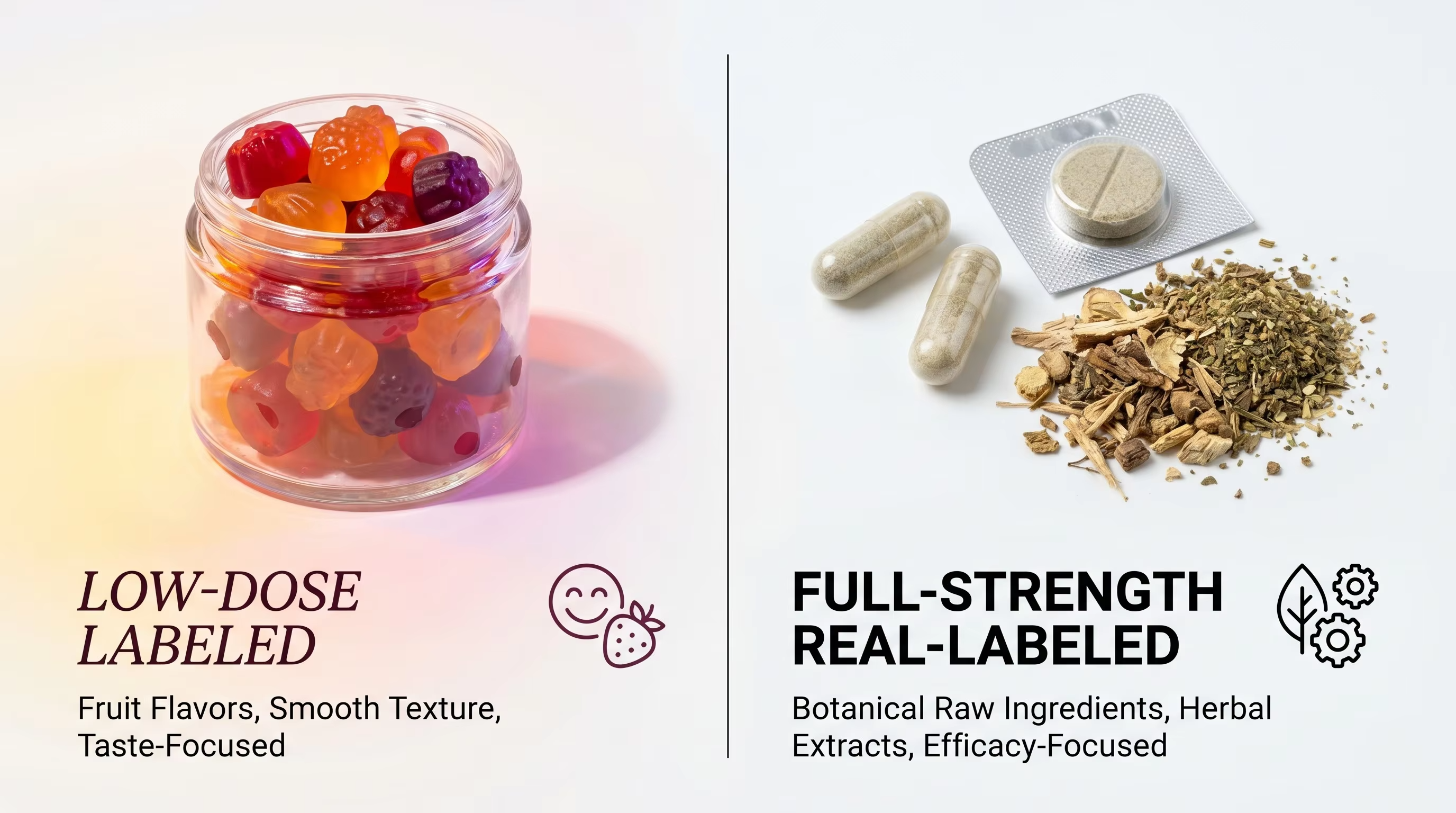
Q1:Which type of supplement has a larger customer group, full-strength real-label or low-dose labeled ones? What are their core differences?
Eugenia:At present, low-dose labeled supplements have more audiences in export markets. But full-strength real-label products will grow more popular as global regulatory standards for supplements become stricter.
Low-dose labeled products prioritize taste; they have smooth, pleasant texture favored by customers who care about flavor.
By contrast, full-strength real-label goods focus on effective raw materials and actual health benefits. They may carry special odors, less chewy texture and cost more.
One key reminder: supplements are not medicines. Neither version delivers instant results. You need consistent long-term use paired with healthy daily routines to see effects.
Q2:How is the factory inspection process carried out to meet full-strength real-label standards?
Eugenia:There are two inspection layers.
First, manufacturers conduct self-inspection for every batch via internal labs or official third-party institutions; only fully qualified goods can leave the factory.
Second, market supervisors take random samples from warehouses or stores. Professional devices test the real ingredient content. If products are labeled with higher doses than actual content (low-dose mismatch) or contain illegal pharmaceutical additives, regulators will order production suspension, full product recall and severe legal punishment.
Q3:Why do gummy supplements melt or turn sticky after long storage & shipping?
Eugenia:Four main reasons.
Long overseas sea transportation and improper stock rotation;
Raw material difference: pectin withstands high heat up to 80°C, while animal-based gelatin softens at only 30°C;
Unfinished high-temperature dehydration during production leaves excess water inside gummies;
Opened packages absorb moisture easily. We suggest finishing opened gummies within 1 month.

- 1311
- 0
- 0
- 0