Custom Silicone Pet Mat Risk Mitigation for Cross-Border Sellers
I once thought a trendy custom silicone pet mat design would fly off Amazon shelves—until my entire shipment was held at US customs for failing FDA food contact safety checks. That misstep taught me that every custom product needs layered risk control, not just a pretty design.
Pre-Research: Certify and Validate Before Committing
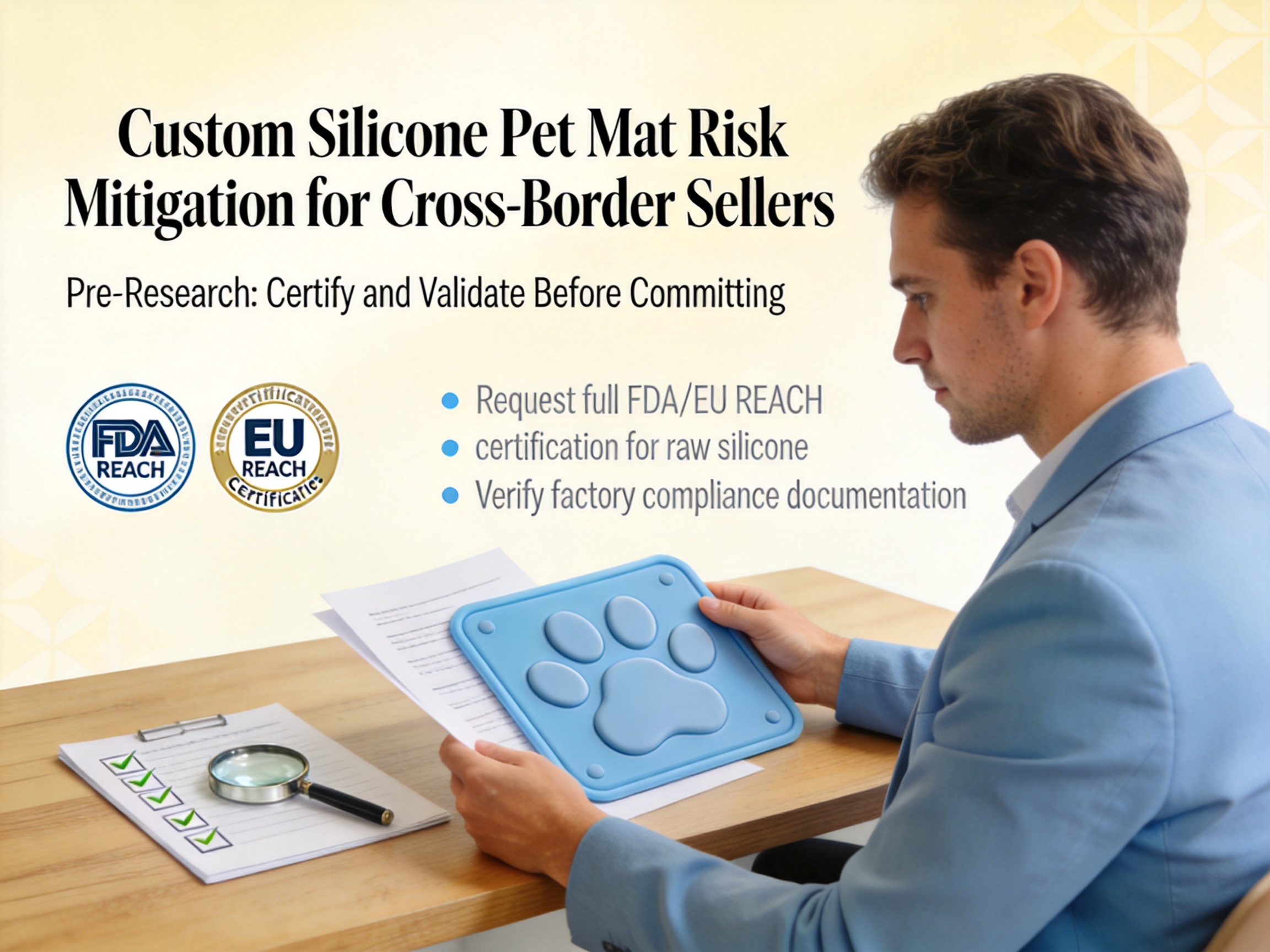
Don’t rely on your factory’s word about compliance. For pet products, request full FDA or EU REACH certification for the raw silicone before finalizing molds. I now also run a quick survey of 50+ repeat customers to confirm must-have features—like a 1cm raised edge to contain spills—instead of assuming trends translate to sales. This cuts down on post-production design changes that eat into margins.
Production: Lock in Mid-Run Quality Checks
Add non-negotiable checkpoints to your manufacturing contract. First, approve a mold sample with a raw material composition report to ensure the factory isn’t diluting silicone with cheaper fillers (I caught this once before full production, saving 20% in potential replacement costs). Second, schedule a third-party inspector to randomly test 10% of each batch for edge smoothness—sharp edges lead to 3x more returns and negative reviews.
After-Sales: Pre-empt Issues to Protect Brand Reputation
Proactively address common pain points by including a stain-removal guide in every package, and offer prepaid return labels for high-risk markets where return expectations are strict. I also track return reasons daily; if more than 5% of returns cite poor non-slip grip, I immediately work with the factory to adjust the bottom texture mold. This reduces long-term refund costs and keeps customer loyalty high.
- 1121
- 0
- 0
- 0