Spotting Pseudo High-Ticket Hits That Drain Your E-Commerce Margins
Ever ordered a container of premium outdoor grills thinking you’d hit margin gold, only to watch 70% of them collect dust in your warehouse? I’ve been there, and it’s not just a bummer for storage space – it’s a margin killer that takes months to bounce back from.
Check Review Velocity Against Sales Rank
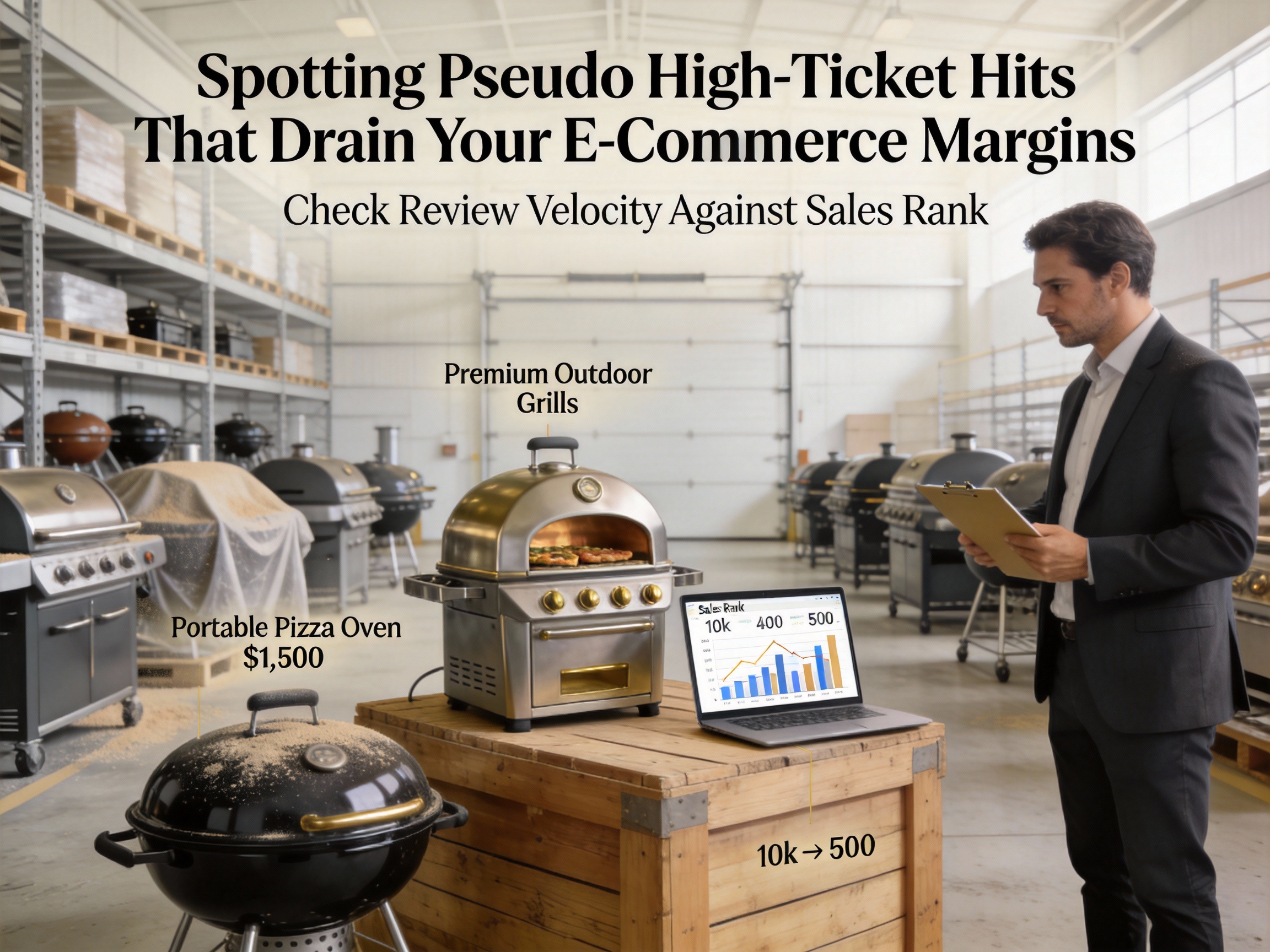
High-ticket products rely on trust, so real sales come with steady, gradual review growth. If a $1,500 portable pizza oven jumps from 10k to 500 in platform sales rank but only has 14 reviews all posted in a 48-hour window, that’s a dead giveaway. Bots or paid reviewers can’t sustain the long tail of genuine feedback, and once the fake hype fades, you’re stuck with inventory no one actually wants.
Question Unusually Low Supplier MOQs
Legitimate premium goods have higher minimum order quantities because manufacturers know demand is consistent. If a supplier offers a “viral” ergonomic standing desk (priced at $800+) with an MOQ of 40, while similar top-sellers require 200 units minimum, they’re likely pushing overstock or untested duds. Negotiate a 10-unit trial batch instead, even if it eats into your short-term margin – it’s worth avoiding a warehouse full of dead stock.
Track Post-Purchase Support Spikes
Real high-ticket buyers expect durability, so returns and complaints should be minimal (under 5% for most categories). If your “trending” industrial tool chest has a 22% return rate within the first week, all citing flimsy drawer slides or missing hardware, you’re dealing with a pseudo hit. These products are often rushed to market to capitalize on fake hype, and the poor quality will tank your seller reputation fast. Pull the listing temporarily and demand a quality audit from your supplier.
Analyze Ad CTR vs. Conversion Rate
When running ads for high-ticket items, a high CTR paired with a dismal conversion rate is a red flag. For example, if your ads for a smart home safe have a 7.8% CTR (way above the 2-3% average for luxury goods) but only a 0.08% conversion rate, people are clicking out of curiosity, not intent. Viral noise doesn’t equal buyer demand – pause your ad spend immediately and redirect that budget to testing a proven high-ticket SKU with steady conversion rates.
- 194
- 1
- 0
- 0