Niche Product Opportunity Spots and My Curated Toolkit for E-Commerce Sellers
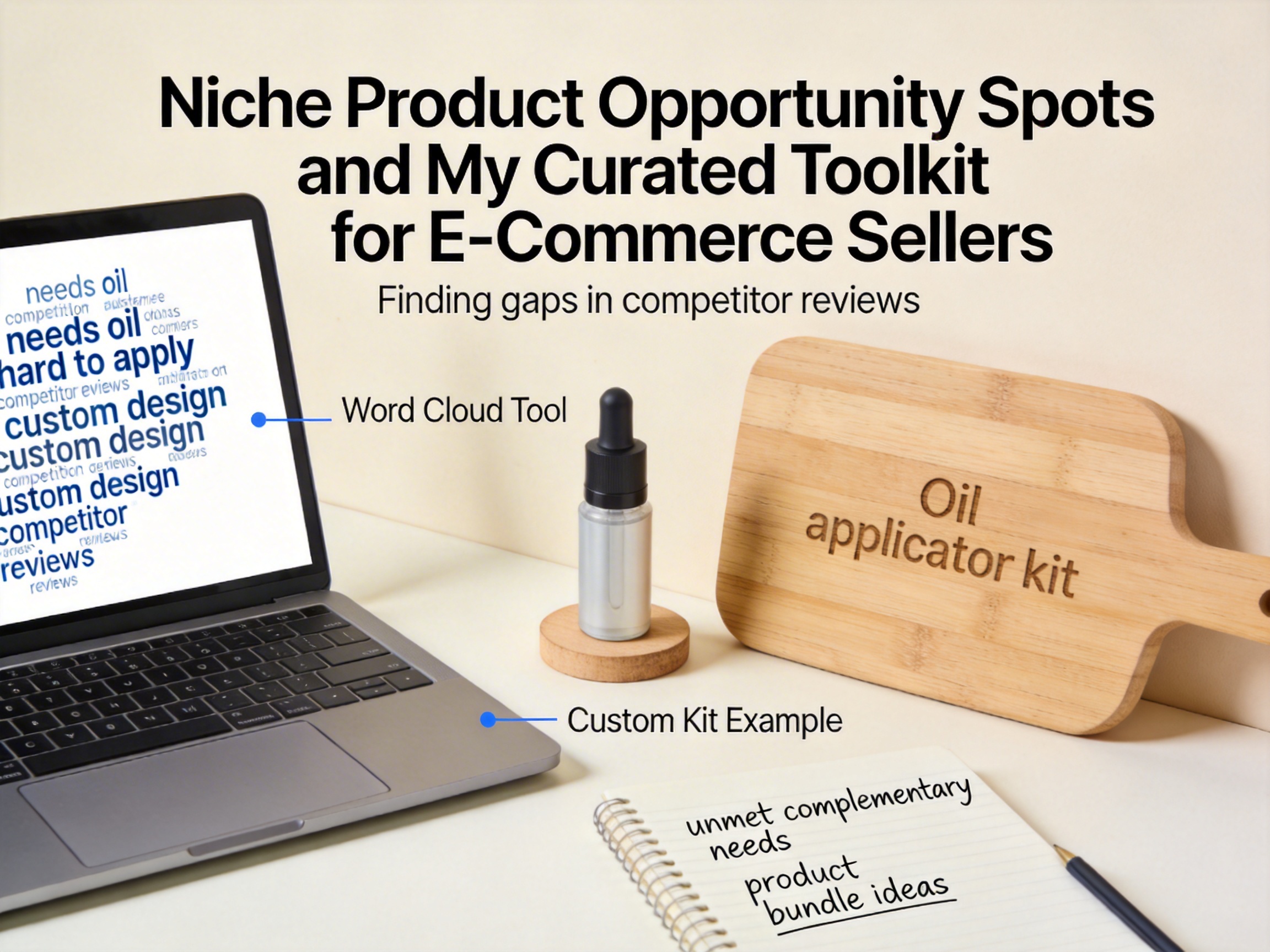
Ever stared at your inventory reports wondering why some slow movers suddenly pick up steam out of nowhere? I’ve spent months obsessing over this, and the answer almost always ties to unmet complementary needs. For example, when my wooden cutting boards started selling faster after I added custom laser-engraved oil applicator kits, I realized I’d missed a gap right under my nose. To find these gaps, I use a word cloud tool to pull common pain points from competitor reviews—look for phrases like “wish there was a matching” or “struggle to find something that fits,” and turn those into low-investment accessory SKUs. This boosts average order value without stretching my fulfillment capacity too thin.
Next, stop fighting for space in crowded main categories and drill into hyper-specific problem-solution subcategories. Instead of “yoga mats,” think “non-slip, sweat-resistant yoga mats for hot yoga practitioners with knee sensitivity.” To validate these, I use platform search autocomplete to uncover long-tail queries that have steady search volume but few competing listings. Then, I cross-reference those queries with supplier minimum order quantities to ensure I can test a small batch without tying up 50% of my working capital. This tactic cut my ad spend by 25% because I wasn’t competing with big brands on generic keywords.
Here’s a mistake I made early on: hoarding every free tool I stumbled across, from keyword trackers to review scrapers. Half of them duplicated data, and I wasted hours switching between platforms instead of acting on insights. Now, I curate a tight toolkit of 3 essential tools: one for review sentiment analysis, one for supplier MOQ comparison, and one for post-purchase survey collection. Each tool directly ties to a specific inventory or customer decision—no shiny extras allowed. This streamlined approach saved me 10+ hours a week that I now spend on optimizing fulfillment.
Finally, don’t sleep on post-purchase feedback loops. I send a short, 2-question survey to buyers of my top products asking what they wish they’d bought alongside their order. Recently, a handful of ceramic planter buyers mentioned struggling to find self-watering inserts that fit the exact size of my pots. I sourced those inserts from a local supplier, and now 30% of planter buyers add the insert to their cart. This isn’t just about adding SKUs—it’s about building a complete solution that keeps customers coming back for more.
- 277
- 0
- 0
- 0