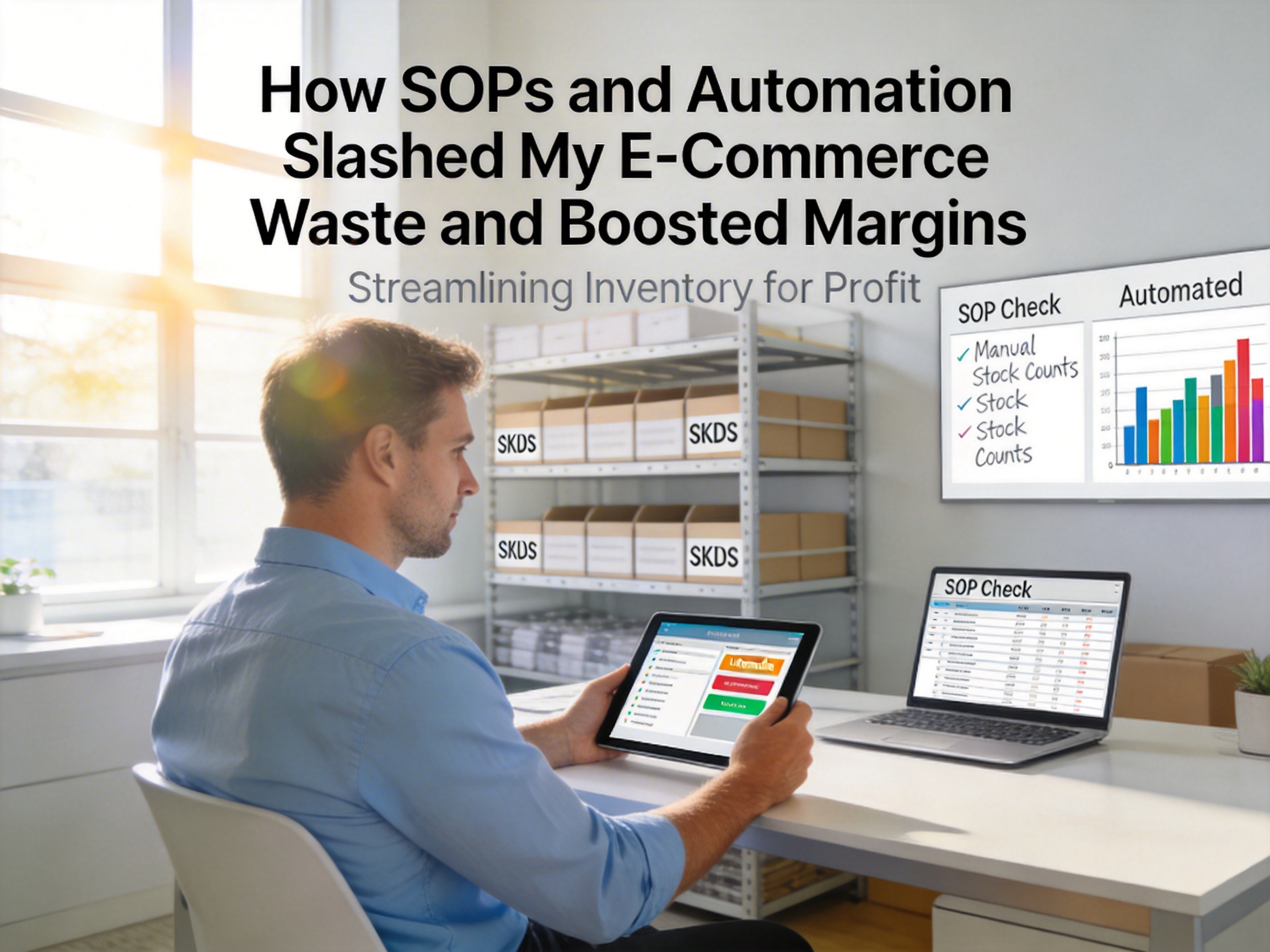
How SOPs and Automation Slashed My E-Commerce Waste and Boosted Margins
Last quarter, I caught my team manually cross-checking stock levels across three warehouses for the third time that week. I nearly lost it—hours of labor that could’ve been spent packing orders or tweaking ad copy, all because we didn’t have a system to do it automatically.
I started by locking down an SOP for inventory reorder triggers. Instead of guessing when to restock, we tied automated alerts to each SKU’s average sales velocity and supplier lead time. For our top-selling face serums, the trigger kicks in when we have 14 days of stock left. But here’s the key: we added a monthly SOP to review these thresholds—after a promotion once, we missed updating the trigger and ended up with 30 extra cases that sat in storage for months. That check-in now saves us thousands in holding costs.
Next, we automated fulfillment error audits. Our warehouse management tool already generates pick lists and packing slips, so we set up a rule that flags any discrepancy between the two before an order ships. If a picker grabs a small size instead of a large, the system stops the order in its tracks. We paired this with an SOP for resolving flags: the team has 15 minutes to cross-verify the item and fix the issue, no exceptions. This cut our return rate from 4.2% to 1.8% in just a few weeks, which directly boosted our margins since we no longer eat the cost of restocking and reshipping wrong items.
Ad spend was another area of waste we tackled. We automated bid adjustments for underperforming ad sets, but we quickly learned that blind automation can backfire. Once, our system paused an ad set for a best-selling hoodie because sales dipped for two days—turns out, the warehouse had a temporary delay in restocking, not that the ad was bad. So we created an SOP: any time an ad is paused by automation, someone on the team has to check inventory levels and sales context within two hours before deciding to reactivate or kill it. This stopped us from losing out on potential sales while still cutting wasted ad spend on truly underperforming items.
The biggest lesson? Automation without clear SOPs is just a recipe for new inefficiencies. I used to think more automation meant less work, but now I know every automated tool needs a rulebook to handle edge cases. Whether it’s inventory, fulfillment, or ads, pairing the two has turned chaotic, wasteful processes into smooth, profit-driving machines.
- 211
- 0
- 0
- 0