How EU Carbon Rules and US Tariff Tweaks Hit Cross-Border E-Commerce Margins
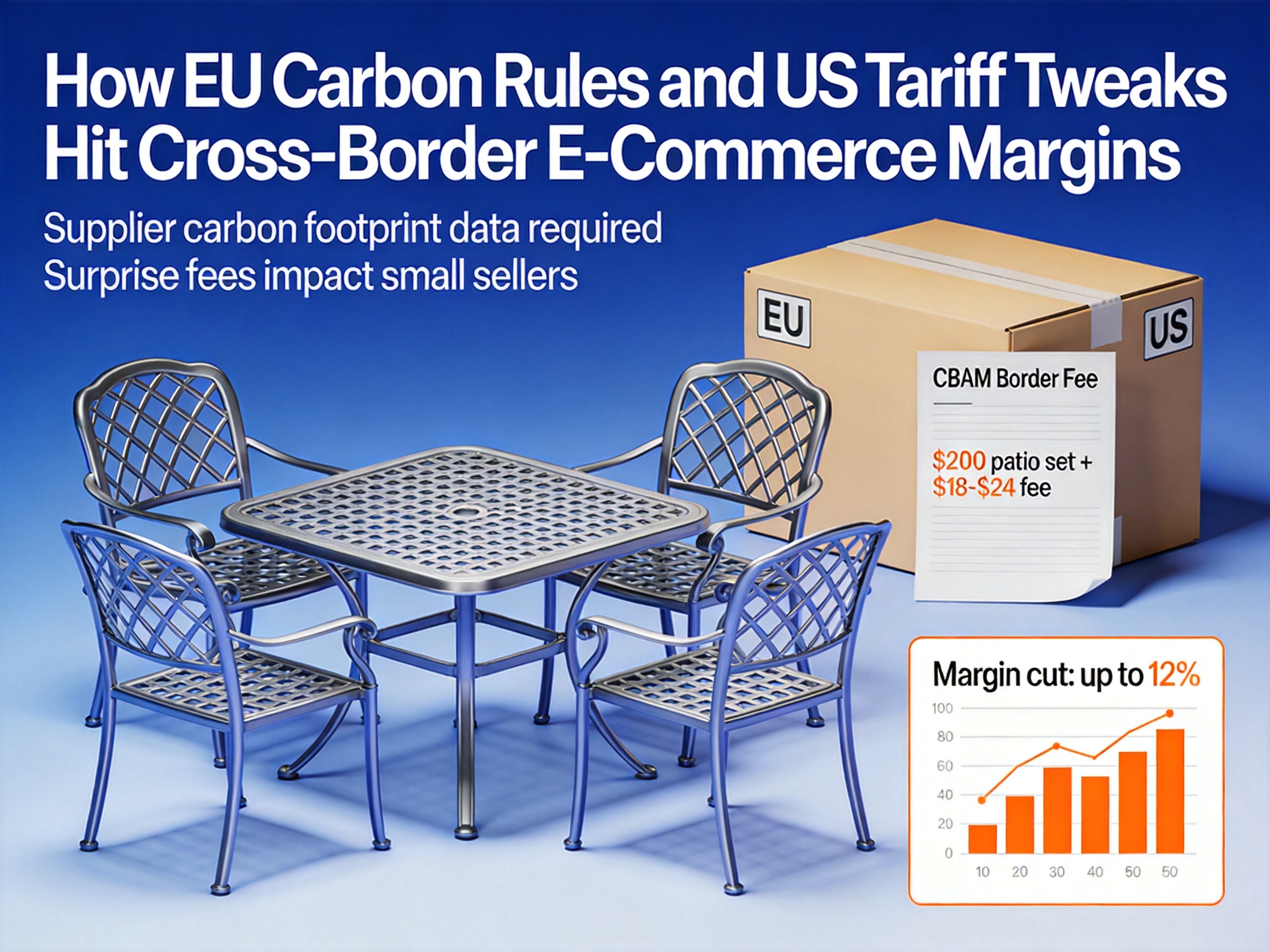
Ever wondered why your steel garden furniture shipment to the EU got hit with a surprise fee that ate into your monthly profit? That’s the EU’s Carbon Border Adjustment Mechanism (CBAM) trickling down to small e-commerce sellers, not just giant steel exporters. If your supplier can’t provide verified data on the carbon footprint of their products, you’ll pay a border fee equivalent to the EU’s carbon price—for a $200 patio set, that’s an extra $18 to $24, cutting your margin by up to 12%. Most small sellers don’t realize CBAM applies to finished goods like outdoor furniture, not just raw materials, so they’re caught off guard.
Over in the US, a quiet tweak to tariff classification for imported textile accessories has thrown a wrench in fulfillment for many apparel sellers. A friend’s shop selling woven belt sets from Vietnam had 40% of their shipments held at customs because the belts were reclassified as "decorative apparel" instead of "accessories," triggering a 10% higher tariff. They had to dip into emergency funds to cover the extra costs, delaying orders and losing 20% of repeat customers who got frustrated with delivery delays.
But it’s not all bad news—regulatory shifts can create competitive edges if you play your cards right. The EU’s Circular Economy Action Plan requires e-commerce sellers of small electronics to register for Extended Producer Responsibility (EPR) schemes. A colleague who sells portable wireless chargers invested in EPR registration across five key EU markets, then added an "EPR-compliant" badge to their listings. Within two months, their sales to eco-conscious shoppers jumped 17%, and they started getting featured in Amazon’s sustainable product categories.
Here’s what you can do right now to stay ahead:
- Ask your suppliers for carbon footprint data immediately—even rough estimates will help you calculate potential CBAM fees and adjust pricing.
- Double-check your US tariff classifications with a customs broker; a $50 consultation can save you thousands in unexpected fees.
- Explore EU EPR registration for high-demand eco-friendly categories—customers are actively seeking compliant products, making it worth the upfront cost.
- 567
- 0
- 0
- 0