Why Your Stagnant Inventory Is Eroding More Than Just Margins
Have you ever stared at a pallet of unsold goods and written it off as a minor cost of doing business? Most of us do, but that’s a mistake rooted in surface-level thinking. Stagnant inventory isn’t just about warehouse rent or depreciation—it’s a loud signal that your demand forecasting is out of sync with what your actual customers want, not what you think they should want.
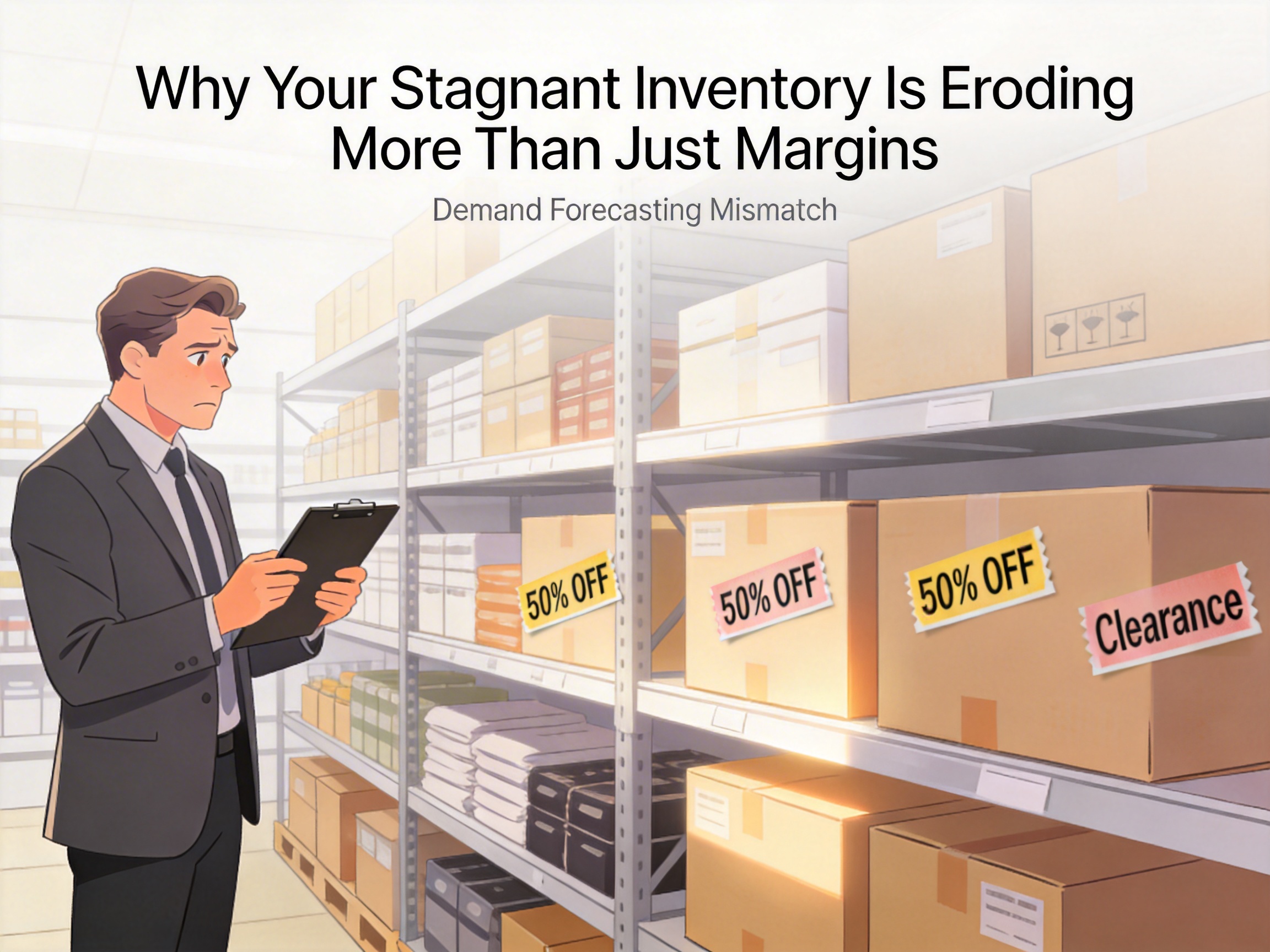
Loyal shoppers don’t miss the same markdown stickers reappearing on the same shelf month after month. Every time you slash prices on slow-movers, you’re quietly devaluing your brand in their minds. They’ll start to wonder if your regular prices are just a cash grab, and next time they need a similar item, they’ll wait for a sale or shop a competitor who doesn’t train them to expect discounts.
Tying up 30% or more of your working capital in dead stock is like parking your cash in a leaking bucket. That money could be used to test small-batch runs of niche products your top customers have been begging for. For example, if your eco-friendly kitchenware line has slow-selling ceramic mugs but consistent inquiries for bamboo spatulas, drop 50 units of the spatulas first—no need to overcommit to a full production run.
Your warehouse team’s workflow is another casualty of ignored stagnant inventory. When slow-movers take up prime picking space, staff waste time navigating around them, which delays fulfillment for your fast-selling items. A quick fix: do a monthly inventory reset where you move all stock that hasn’t sold in 90+ days to back storage. This frees up front space for high-turnover SKUs and cuts average pick times by roughly 15%.
- 292
- 0
- 0
- 0