Code & Data Over Gut Checks: Smart E-Commerce Inventory Wins
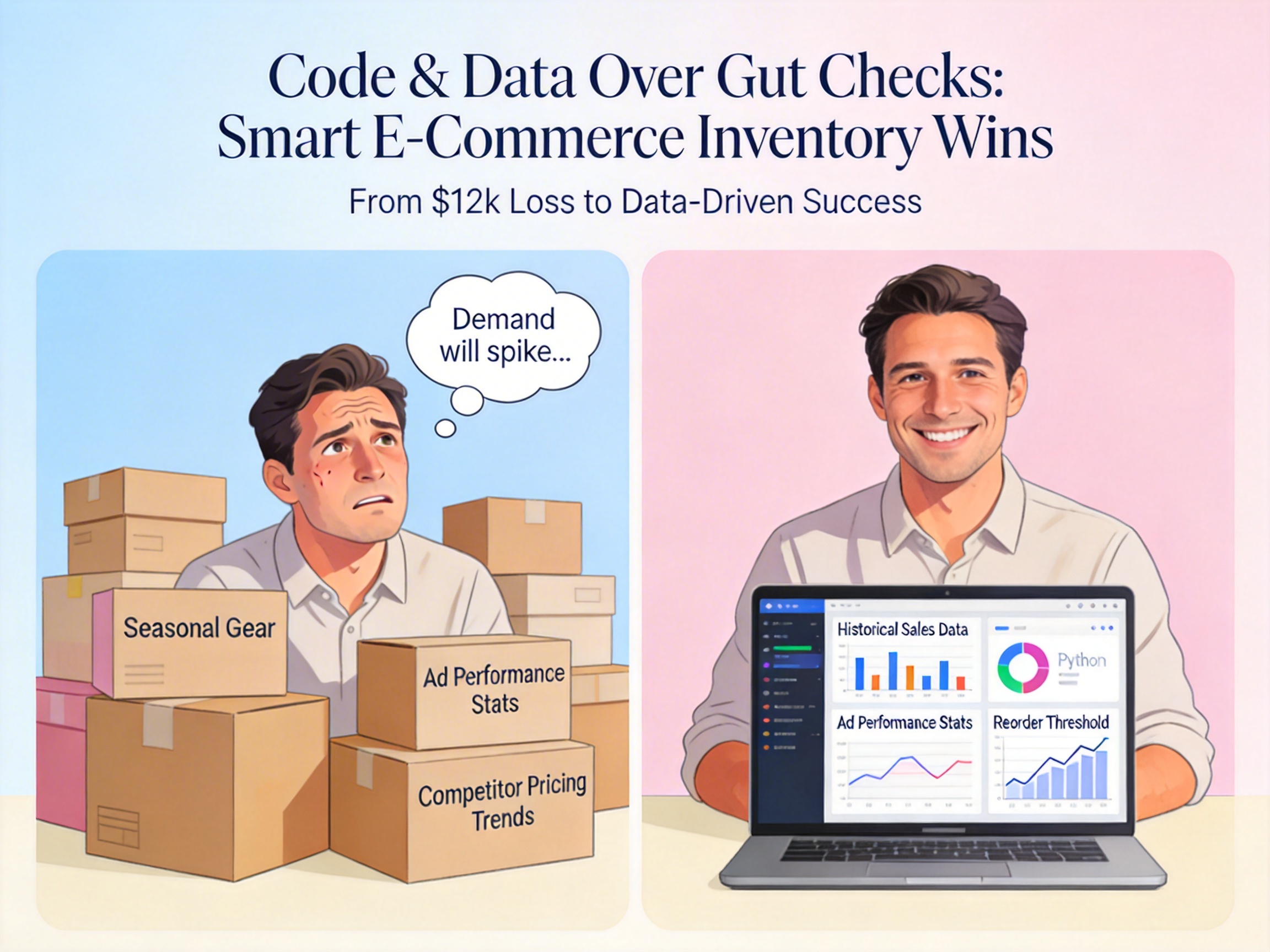
Last year, I wasted $12k on overstocked seasonal gear because I “felt” demand would spike. That’s when I swore off all inventory decisions that didn’t come with hard data or a script to back them up. No more crossing fingers or following what other sellers were doing blindly—every call had to be rooted in logic and measurable metrics.
First, I built a simple Python script that pulls historical sales data, ad performance stats, and competitor pricing trends to calculate reorder thresholds for each SKU. It doesn’t just look at total sales; it breaks down which traffic sources drove the most conversions for each product, and adjusts the threshold if those sources’ costs rise above my margin limit. For example, when my Google Ads CPC for a hiking boot went up by 15%, the script automatically lowered the reorder quantity by 20% to protect profits. No more guesswork—every number is tied to actual customer behavior and market signals.
Second, I integrated my inventory management tool with my e-commerce platform’s API to eliminate manual stock counts. Before, I’d spend weekends counting boxes and often miss discrepancies that led to stockouts or overstock. Now, every sale, return, and restock is logged in real-time, and the tool sends alerts when stock levels hit the script-calculated threshold. This cut my inventory holding costs by 18% in the first quarter because I stopped overordering slow-moving items.
Third, I stopped jumping on “viral” product trends without running them through a data validation check. Instead of buying into hype, I use keyword research tools to check search volume stability, cross-reference with return rates of similar products in my niche, and calculate the potential margin after fulfillment costs. Last month, a viral kitchen gadget was everywhere, but my data showed it had a 40% return rate due to quality issues—so I skipped it, saving myself from stuck inventory and negative reviews.
Finally, I avoid any tactic that relies on “intuition” or “industry myths.” For example, some sellers swear by holding extra stock for “peak periods,” but my data showed that 60% of my peak sales came from restocking mid-period based on real-time demand, not pre-ordering months in advance. Trusting code and data hasn’t just saved me money—it’s made my inventory process predictable and scalable, no voodoo required.
- 392
- 0
- 0
- 0